
Best Knee Replacement Surgeon in Nagpur
Treatments
Advanced Care by the Best Knee Replacement Surgeon in Nagpur
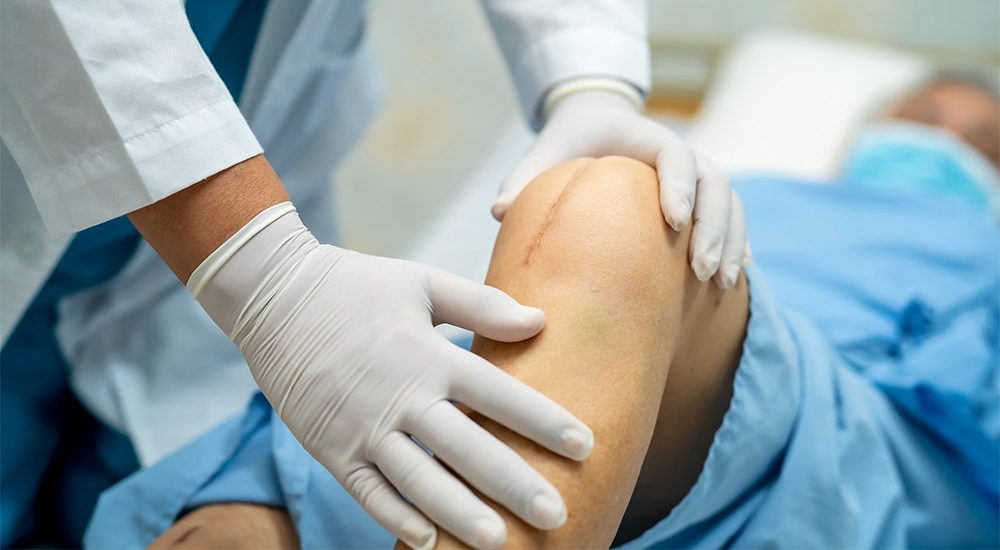
Are you struggling with chronic knee pain that restricts your mobility and affects your overall quality of life? Dr. Laghvendu Shekhar, recognized as the best orthopedic surgeon in Nagpur, offers advanced total knee replacement surgery to help you regain pain-free movement and improve your health. With over 20 years of experience and expertise in robotic surgery, Dr. Laghvendu Shekhar is renowned for delivering exceptional outcomes for patients with complex knee conditions.
What is Total Knee Replacement?
- Severe arthritis (such as osteoarthritis or rheumatoid arthritis).
- Traumatic knee injuries.
- Chronic knee pain that does not improve with non-surgical treatments.
If you’re searching for best knee replacement surgeon in Nagpur, Dr. Shekhar’s expertise ensures you receive the most advanced and personalized care.
Recognizing the Symptoms: Signs You May Need Knee Replacement Surgery
Knee joint degradation rarely happens overnight. Most patients tolerate joint discomfort for years before realizing that their protective cartilage has completely worn away. If you or an elderly family member are experiencing any of the following warning signs, it is critical to consult a specialized knee replacement surgeon in Nagpur for a definitive evaluation.
Persistent, Severe Knee Pain:
Agonizing pain that directly limits daily activities, such as walking, climbing stairs, or getting in and out of a car. You find yourself constantly planning your day around your joint pain.
Resting Joint Discomfort & Insomnia:
Pain that remains intense even while resting, sitting still, or attempting to sleep at night, frequently waking you up despite taking pain-relief medications.
Chronic Joint Inflammation and Stiffness:
Visible, hard swelling around the knee joint capsule that fails to respond to ice packs, anti-inflammatory ointments, or physical therapy. The knee feels locked and severely stiff, particularly first thing in the morning.
Audible Grating or Crunching (Crepitus):
A distinct scraping, grinding, or popping sensation inside the joint when you bend or straighten your leg. This is a primary clinical indicator of advanced bone-on-bone friction.
Visible Joint Deformity or Instability:
The knee begins to visibly bow inward or outward (commonly known as “knock knees” or “bow-legs”), or the joint frequently feels unstable, as if it might give way or collapse under your weight.
Root Causes of Severe Knee Joint Degradation
A total knee replacement surgery becomes a medically necessary intervention when the smooth, shock-absorbing articular cartilage covering your joint completely erodes, leaving raw bone rubbing painfully against raw bone.
The most common underlying medical causes behind this advanced joint degradation include:
1. Osteoarthritis (Degenerative Joint Disease):
The single most frequent reason patients seek out a knee replacement surgeon in Nagpur. This is an age-related “wear-and-tear” condition where the joint cartilage slowly thins and breaks down over time, typically affecting adults over the age of 50.
2. Rheumatoid Arthritis (Inflammatory Arthritis):
A chronic autoimmune disorder where the body’s immune system mistakenly attacks the synovial membrane lining the joints. The resulting chronic inflammation destroys the cartilage, leading to severe joint deformity, stiffness, and structural breakdown.
3. Post-Traumatic Arthritis:
This occurs months or years following a severe knee injury. A past bone fracture near the joint, a torn ligament or a severe meniscus tear alters natural joint mechanics, causing the cartilage to wear down prematurely.
4. Avascular Necrosis of the Knee:
A condition where the blood supply to a segment of the bone within the knee joint is temporarily or permanently disrupted. Without proper blood flow, the bone structure collapses, rapidly destroying the surrounding joint surface and making advanced joint reconstruction essential.
Benefits of Knee Replacement Surgery
Choosing knee replacement surgery can provide a wide range of benefits, including:
Pain Relief
Say goodbye to chronic knee pain and discomfort.
Improved Mobility
Restore your ability to move freely and independently.
Better Quality of Life
Return to daily activities without the limitations of knee pain.
Long Lasting Results
Modern knee implants can last 15-20 years or longer, providing long-term relief.
Dr. Laghvendu Shekhar performs robotic knee replacement surgeries using state-of-the-art technology, ensuring greater precision and faster recovery times at one of the best orthopedic hospitals in Nagpur.
Types of Knee Replacement Surgery
There are different types of knee replacement procedures, depending on the specific needs of the patient:
Dr. Laghvendu Shekhar, one of the best knee replacement specialist in Nagpur, offers advanced knee replacement options to address various patient needs. These include:
Robotic Assisted Knee Replacement
In robotic knee replacement, cutting-edge robotic systems assist Dr. Laghvendu Shekhar in performing the procedure with high precision. This minimally invasive approach results in less tissue damage, reduced blood loss, and faster recovery. Robotic guidance ensures accurate alignment of the knee implant, leading to improved long-term outcomes. It cost can vary but often provides quicker recovery and better results.
Computer Assisted Knee Replacement
Computer-assisted surgery (CAS) uses advanced imaging and computer systems to guide the surgeon during knee replacement. This technology ensures precise implant placement and alignment, reducing the risk of complications. Dr. Laghvendu Shekhar is a skilled joint replacement surgeon in Nagpur, using CAS to enhance surgical accuracy and improve knee function.
Minimally Invasive and Zero Pain Technique
For faster recovery and minimal discomfort, Dr. Shekhar offers the minimally invasive and zero pain technique. With smaller incisions and less tissue disruption, this approach reduces pain, scarring, and recovery time. Patients can return to normal activities more quickly with less post-operative pain.
Post-Surgery Recovery Timeline: Your Journey to Mobility
One of the first questions patients ask a knee replacement surgeon in Nagpur is how long it will take to return to normal daily life. Thanks to the advanced, muscle-sparing techniques utilized by Dr. Laghvendu Shekhar, recovery from total knee replacement surgery is structured to be smooth, safe, and significantly faster than traditional methods.
The First 3 Days: Getting Back on Your Feet
Your rehabilitation begins almost immediately. Within 24 hours of your procedure, an orthopedic physical therapist will assist you in standing up and taking your first supported steps using a walker. Advanced pain-management protocols and localized nerve blocks are used during this phase to ensure that your initial mobilization inside the hospital is highly comfortable and virtually pain-free.
Weeks 1 to 3: Building Strength at Home
Once you are discharged and resting at home, your daily joint rehabilitation exercises will focus on reducing post-surgical stiffness and improving your knee’s bending capacity. By the end of the third week, your surgical stitches are safely removed, and as your joint stability improves, you will naturally transition from using a walker to a simple walking stick.
Weeks 4 to 6: Returning to Independence
During this period, your thigh muscles regain substantial structural strength, and your dependence on any pain medication drops to zero. Most patients are now able to walk completely unassisted, safely resume driving, return to light office desk work, and comfortably manage their routine household activities without help.
Month 3 and Beyond: Living Pain-Free
By the third month, your high-durability knee implant functions seamlessly as a natural joint. The agonizing, bone-on-bone arthritic friction you felt before surgery is completely gone. You can comfortably climb stairs, go for long outdoor walks, and fully reclaim an active, independent lifestyle.
Why Choose Dr. Shekhar for Knee Replacement Surgery in Nagpur?
- Expertise and Experience: Dr. Laghvendu Shekhar is one of the leading orthopedic surgeons in Nagpur. He specializes in complex knee surgeries and revisions, ensuring the best possible outcomes for every patient.
- Advanced Robotic Technology: As a pioneer in robotic knee replacement in Nagpur, Dr. Laghvendu Shekhar uses cutting-edge technology that enhances precision and reduces recovery times.
- Comprehensive Care: From initial consultation to post-surgery rehabilitation, Dr. Laghvendu Shekhar and his team provide complete care, ensuring you receive the best treatment throughout your recovery process.
- Personalized Approach: He believes in treating each patient as an individual, tailoring the treatment plan based on your unique medical needs and lifestyle.
Take the First Step Toward a Pain-Free Life
Frequently Asked Questions
Condition Where Total Knee Replacement (TKR) is Useful?
Total knee replacement is recommended for individuals with severe knee arthritis, osteoarthritis, rheumatoid arthritis, post-traumatic arthritis, or those with knee deformities or severe fractures. These conditions cause pain, stiffness, and significant limitations in mobility, which affect daily activities.
What is the Lifespan of Total Knee Replacement (TKR) Implants?
The lifespan of modern TKR implants is typically 15-20 years, depending on the patient’s activity level and adherence to post-operative care. Patients with low-impact lifestyles can help extend the implant’s lifespan by avoiding high-stress activities on the knee.
What Types of Knee Replacements Exist?
There are two main types: Total Knee Replacement (TKR), which replaces both the femur and tibia with artificial components, and Partial Knee Replacement (PKR), which is suitable for localized arthritis or damage, where only one part of the knee is replaced.
What is the Recovery Time After Knee Replacement?
Recovery time typically ranges from 3 to 6 months. While light activities can be resumed within 4 to 6 weeks, full recovery, including regaining strength and knee function, may take longer depending on rehabilitation progress.
What Are the Risks Associated with Knee Replacement Surgery?
Risks include infection, blood clots, implant loosening, nerve injury, and stiffness. However, these risks are rare and manageable with early detection and proper care under the guidance of an experienced surgeon.
What is the Success Rate of Knee Replacement Surgery?
TKR has a high success rate, with over 90% of patients experiencing significant pain relief and improved mobility, leading to a better quality of life.
Why Should I Choose Dr. Shekhar for Total Knee Replacement (TKR) in Nagpur?
When can I climb stairs?
If you have undergone only one knee than stair climbing is allowed 3rd day after surgery. If both the knees are done than stair climbing is started after 3 to 4 weeks.